Solutions
Digital Product Delivery
“Senior-led delivery from architecture to production — without the agency overhead.”
Executive summary
“We have a funded product vision and a committed timeline. We do not have the engineering architecture, the delivery process, or the team to execute it at the quality the business requires.”
Methodology
Revni Product Delivery System
Target outcome
12wkaverage time from architecture sign-off to production-ready delivery
Engagement shape. End-to-end product delivery programme with senior engineering ownership. Revni holds architecture accountability through definition, build, and production handover — accountable for the outcome, not the activity.
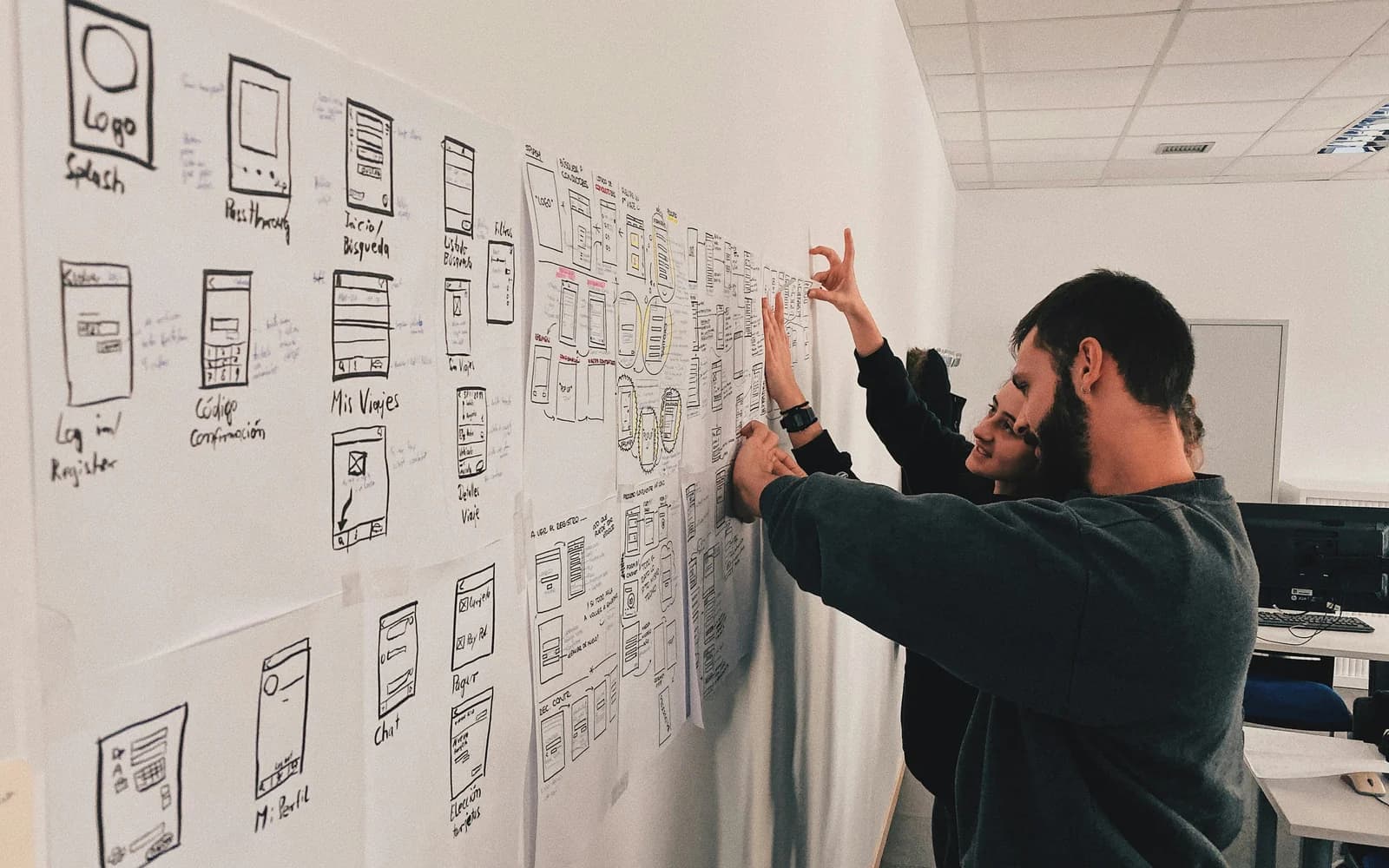
Vision vs delivery gap
A funded roadmap without execution infrastructure
A product roadmap without delivery infrastructure
What ships together
Design, engineering, leadership — not handoffs
Product delivery requires design, engineering, and technical leadership operating as one accountable programme — not sequential handoffs.
- 01Digital Products & Software EngineeringDiscipline detail
Custom platforms, APIs, and product engineering with senior architecture oversight and delivery discipline.
- 02Product Design & User ExperienceDiscipline detail
Research-led UX, design systems, and product interfaces that improve adoption and reduce delivery rework.
- 03Technical Strategy & Fractional CTODiscipline detail
Senior technology leadership for roadmap clarity, architecture decisions, and vendor oversight — without a full-time hire.
Delivery programme
Revni Product Delivery System
Discovery-to-scale delivery system — outcome-bound MVPs, roadmap governance, and operating cadence at enterprise quality.
Discovery → delivery
How strategy becomes shippable product
Outcome-bound delivery — discovery, build, and scale as one accountable cadence
End-to-end product delivery programme with senior engineering ownership. Revni holds architecture accountability through definition, build, and production handover — accountable for the outcome, not the activity.
Roadmap governance
Who decides what ships — and what gets cut
Roadmaps fail without decision rights. Governance defines intake criteria, prioritisation authority, scope boundaries, and the cadence at which trade-offs are made visible.
| Decision stage | Accountable role | Criteria |
|---|---|---|
| Intake | Product sponsor | How work enters the roadmap — criteria and sponsorship. |
| Prioritisation | Product director | Who decides, by what criteria, and on what cadence. |
| Scope control | Delivery lead | What is in — and explicitly out — of each release. |
| Review | Executive sponsor | Regular trade-off visibility for accountable sponsors. |
MVP scope
Minimum viable outcome — not feature accumulation
An MVP defines the smallest deliverable that proves the business outcome — with production-grade quality standards, not a prototype that requires rebuilding.
Boundary 1
Outcome boundary
The smallest deliverable that proves the business outcome.
Not a feature list — a measurable change in customer or operational behaviour.
Boundary 2
Quality floor
Non-negotiable production standards from day one.
Security, observability, and maintainability — not deferred to phase two.
Boundary 3
Scope ceiling
What is explicitly deferred to protect delivery integrity.
Prevents MVP scope creep that destroys timeline and quality commitments.
Boundary 4
Learning objective
What the business validates before scaling investment.
The hypothesis the MVP exists to prove or disprove.
Scaling delivery
From first release to product organisation
- 1
First release
Production launch with operational readiness.
- 2
Cadence
Predictable release rhythm and quality gates.
- 3
Team structure
Boundaries aligned to product areas.
- 4
Product ops
Rituals and ownership that maintain velocity at scale.
Product operations
Quality and velocity at scale
Product operations defines the rituals, ownership, and release rhythm that allow teams to ship frequently without accumulating quality debt.
Planning rhythm
Sprint or flow cadence matched to product risk profile.
Quality gates
Definition of done enforced before release.
Stakeholder visibility
Sponsors see progress without disrupting delivery.
Continuous improvement
Retrospectives drive systemic fixes, not heroics.
Delivery maturity
Before and after operating state
Before engagement, delivery is hero-dependent and unpredictable. After, architecture, process, and ownership produce repeatable production outcomes.
Before
Timeline commitments without delivery infrastructure — hero-dependent execution and unpredictable quality.
After
Accountable programme with architecture ownership through launch and repeatable production outcomes.
Proof
Evidence from product delivery programmes
Evidence from comparable engagements — metrics first, details on request.
89%
weekly active usage
35%
faster site reporting
89%
weekly active usage across pilot regions within 90 days
Discuss similar outcomes
Share your context and we will outline scope, team shape, and a realistic path to measurable results.
Engagement models
Choose the partnership shape that fits
Product delivery engagements require senior ownership through architecture, build, and launch. Select the model that matches scope and internal capacity.
- 01
Strategic Advisory
Architecture reviews, roadmaps, and technology decision support.
Learn more - 02
Fractional CTO
Senior technology leadership without a full-time executive hire.
Learn more - 03
Project Delivery
End-to-end delivery for clearly defined initiatives with measurable business outcomes.
Learn more - 04
Dedicated Teams
Specialized engineering teams integrated into your organization and delivery cadence.
Learn more
Solution path
Tell us what's not working.
Describe the constraint behind Digital Product Delivery. We'll tell you which engagement model applies and what to expect from it.